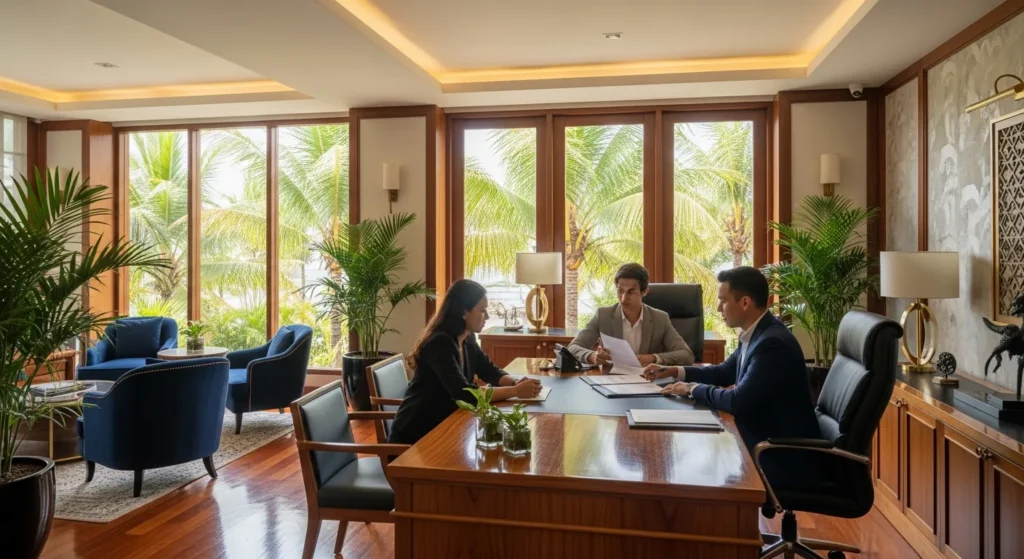
pma property ownership rights in indonesia
PMA Property Ownership Rights in Indonesia For many international investors, the allure of Indonesia, particularly the vibrant island of Bali, […]
PMA Property Ownership Rights in Indonesia
For many international investors, the allure of Indonesia, particularly the vibrant island of Bali, extends beyond its breathtaking landscapes and rich culture. It’s a compelling destination for investment, from boutique villas to sprawling hospitality complexes. However, intricate landscape of property ownership in Indonesia, especially for foreign entities, often presents a labyrinth of legal complexities. The dream of owning a piece of paradise can quickly become a bureaucratic challenge without the right guidance.
At Juara Holding, we understand these aspirations and the underlying concerns. Our mission is to demystify the process, transforming potential hurdles into clear pathways for successful investment. If you’re considering a PMA setup Bali to secure your property interests, understanding the nuanced legal framework is your first critical step. This guide, updated with 2026 insights, cuts through the jargon to provide you with a clear, actionable understanding of what a PT PMA truly allows.
The 2026 Reality: Navigating Indonesian Land Law
The fundamental principle of Indonesian land law remains unchanged in 2026: only Indonesian citizens can hold freehold (“Hak Milik”) title in their own name. This core tenet, established by the Basic Agrarian Law (UUPA 1960), continues to shape foreign investment strategies in property. This means that as a foreign individual, direct ownership of Hak Milik is not an option.
Instead, foreign individuals and entities can access property rights through specific alternative titles:
- Hak Guna Bangunan (HGB – Right to Build): Grants the right to construct and possess buildings on state land or land owned by another party (often Hak Milik).
- Hak Pakai (Right to Use): Grants the right to use and/or collect produce from state land or land owned by another party.
- Hak Sewa (Leasehold): A contractual agreement for a specified period.
While Hak Pakai and Hak Sewa can be held personally by foreigners under specific conditions, the most robust and secure route for significant foreign property investment, especially for commercial ventures like hotels or resorts in areas like Canggu or Ubud, is through a PT PMA (Perseroan Terbatas Penanaman Modal Asing). This entity, recognized as an Indonesian legal person, is the primary vehicle for foreign investors to hold HGB and Hak Pakai titles, aligning perfectly with strategic PMA setup Bali objectives.
Key Insights from Our Practice at Juara Holding
Through our extensive experience, we’ve guided countless clients through the intricacies of PT PMA property acquisition. A PT PMA, being an Indonesian legal entity, can legally hold land titles such as HGB and Hak Pakai. This is a crucial distinction: the land certificate is issued in the name of the PT PMA, not the individual foreign shareholder. This structure provides a secure and legally compliant framework for foreign direct investment.
The landscape for foreign investment broadened significantly with the Omnibus Law (Law 11/2020) and its implementing regulations. By 2026, most property-related, tourism, and hospitality business classifications are open to 100% foreign ownership via a PT PMA, subject to the current Positive Investment List (Presidential Regulation 10/2021, amended by 49/2021). This means that developing a villa complex in Sanur or a hotel in Denpasar is now more accessible than ever for foreign investors through a well-executed PMA setup Bali.
From our practice, we often encounter questions regarding the specific terms of these rights:
- Hak Guna Bangunan (HGB): Typically granted for an initial period of 20-30 years, it is extendable for another 20-30 years, and then renewable for a further 30 years. This offers substantial long-term security, equating to up to 80 years of control over the land. We always emphasize thorough due diligence, including land zoning checks with local authorities like the Kantor Pertanahan Badung, to ensure the land is suitable for the intended development.
- Hak Pakai: This right can be granted for an initial period of up to 30 years, extendable for 20 years, and renewable for another 30 years. Hak Pakai is particularly versatile, often used for residential purposes or when building on state land or on top of HGB owned by another party, where permitted.
The strategic choice between HGB and Hak Pakai depends heavily on the specific investment project and its long-term goals. We assist our clients in navigating these choices, ensuring compliance and maximizing investment security.
Step-by-Step Practical Guide to PMA Property Acquisition
Embarking on property ownership via a PT PMA requires a structured approach. Here’s a simplified guide based on our expertise:
- Company Establishment (PT PMA): This is the foundational step. You must establish your PT PMA, defining your business activities (KBLI codes) in alignment with your property development or hospitality goals. This involves drafting articles of association, securing legal domicile, and registering with the Ministry of Law and Human Rights. For detailed PMA setup Bali requirements, we have comprehensive guides.
- Investment Plan & Business Licensing: Your PT PMA’s activities must align with the Positive Investment List. For tourism and hospitality sectors, most are open to 100% foreign ownership. You’ll need to secure an Investment Business License (Izin Usaha Penanaman Modal) from the Investment Coordinating Board (BKPM).
- Land Due Diligence & Acquisition: Before any purchase, rigorous due diligence is paramount. This includes verifying the land’s legal status, zoning regulations (e.g., green